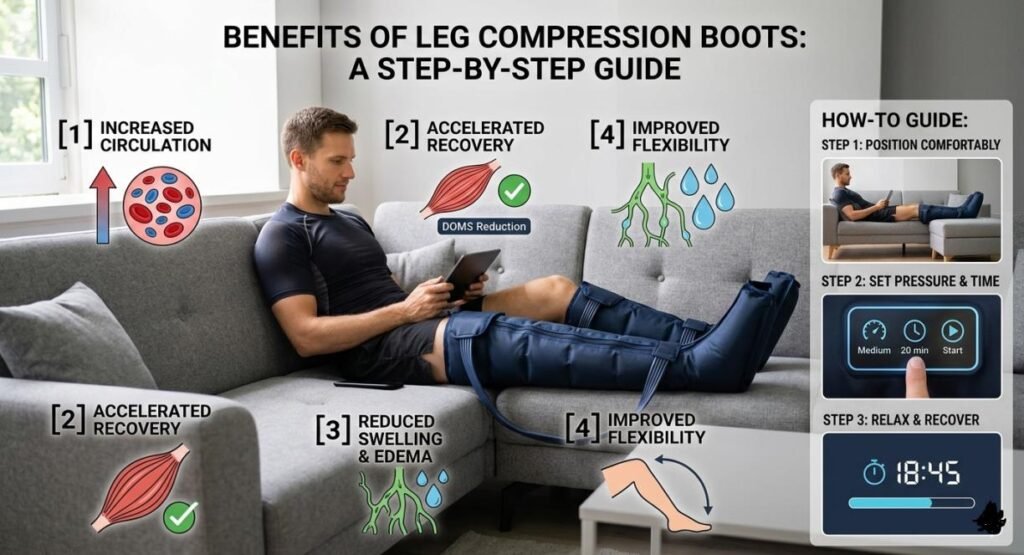

If you’ve been searching for smarter ways to recover after workouts, reduce leg fatigue, or simply give your legs a break after long hours of standing, you’ve probably come across leg compression boots. In recent years, these recovery devices have become popular with athletes, runners, gym-goers, frequent travelers, and even people who just want relief from tired, heavy-feeling legs.
Benefits of leg compression boots are inflatable sleeves that wrap around your legs and use intermittent pneumatic compression (IPC)—a cycle of inflation and deflation—to apply pressure in stages. In medical settings, this type of device is commonly used to help keep blood moving in the legs, especially when someone is inactive after surgery or illness. These devices are also used in some cases to support lymphedema care.
What Are Leg Compression Boots?
Leg compression boots are wearable recovery sleeves that cover part or all of the legs and connect to a small control unit. Once turned on, the device fills different air chambers with pressure in a sequence. This creates a wave-like squeeze that usually starts lower on the leg and moves upward.
This technology is based on intermittent pneumatic compression, a medical method that has long been used to help keep blood flowing in the legs when a person is less mobile. Hospitals often use these devices after surgery, during recovery from illness, or in situations where the risk of blood pooling and clot formation is higher.
How Leg Compression Boots Work
At a basic level, the boots inflate and deflate in cycles. When the chambers inflate, they gently squeeze the legs. When they deflate, the pressure releases. In medical IPC devices, this pattern is designed to help move venous blood upward toward the heart and reduce stagnation in the legs.
The Science Behind Air Compression Therapy
The main idea behind air compression therapy is simple: when blood flow in the legs slows down—such as after sitting, lying down, or intense exercise—fluid and blood can pool more easily. Intermittent compression adds external pressure that can help support movement of blood through the veins. Medical sources note that IPC may also support the body’s natural anti-clotting processes in certain settings.
For sports recovery, the evidence is more modest. A 2024 systematic review and meta-analysis found trivial to small benefits for muscular function and trivial to moderate effects for pain and soreness, suggesting that compression boots may be more helpful for how your legs feel than for dramatically changing athletic performance.
Difference Between Compression Boots and Compression Socks
Compression socks provide constant graduated pressure, usually tighter at the ankle and lighter as they move upward. They’re often worn during the day, during travel, or while standing for long periods. Compression boots, on the other hand, provide active, rhythmic pressure by inflating and deflating in cycles. That makes boots more dynamic, while socks are more passive.
Read More: 5 Advantages of Darkwarfall Gaming for Smart Players
How Leg Compression Boots Actually Work
Understanding how they work makes the benefits of leg compression boots much easier to explain.
Step 1: You Wear the Boots Over Your Legs: You sit or lie down and zip or slide the boots onto your legs. Depending on the model, they may cover the calves only or go from the feet all the way to the thighs.
Step 2: The Chambers Fill With Air in Sequence:Inside the boots are multiple air chambers. The control unit sends air into these chambers one by one rather than all at once. In medical IPC devices, the sleeves typically inflate and deflate in repeated cycles, often every 20 to 60 seconds depending on the device and protocol.
Step 3: Pressure Moves Up the Legs to Improve Circulation Support: As the lower chambers inflate first and the upper chambers follow, the pressure creates an upward “milking” effect. This is designed to help push venous blood back toward the heart and reduce pooling in the lower limbs. That mechanism is one of the most important reasons IPC is used medically.
Step 4: The Boots Release and Repeat the Cycle: After inflation, the pressure releases. Then the cycle starts again. This repeated squeeze-and-release pattern is why many people describe the experience as feeling like a massage.
Step 5: Your Muscles Feel Relaxed and Recovered: Many users report that their legs feel lighter, less stiff, or less sore after a session. Research in athletes suggests the most consistent benefit is reduced perceived soreness, rather than a guaranteed boost in strength or performance.
Top Benefits of Leg Compression Boots
This is the heart of the article, and where your focus keyword naturally fits best. Below are the most realistic, evidence-based benefits of leg compression boots.
Helps Support Healthy Blood Flow in the Legs
The strongest evidence behind compression boots comes from medical IPC use. These devices are designed to help blood move through the leg veins and reduce the chance of blood pooling when someone is inactive. That’s why they’re commonly used in hospitals after surgery or during periods of reduced mobility.
May Reduce Post-Workout Muscle Soreness
This is one of the most commonly discussed benefits of leg compression boots in the fitness world. According to a 2024 systematic review and meta-analysis, lower-limb IPC showed a trivial to moderate effect for pain and soreness, meaning some users may notice less post-exercise discomfort.
Can Support Recovery Between Hard Training Sessions
If you train frequently, recovery matters almost as much as the workout itself. Compression boots may help you feel more ready for your next session by reducing the “heavy legs” feeling that sometimes follows hard workouts.
However, it’s important to stay honest here: research suggests the effects on muscular function are generally small, not dramatic. In other words, they may help you feel better, but they are not a replacement for sleep, nutrition, hydration, and rest.
May Help Reduce Temporary Leg Swelling
Compression therapy is commonly used as part of swelling management. Mayo Clinic notes that compression garments can help with mild edema, especially when paired with elevating the affected limb. IPC devices are also used in some cases of lymphedema care.
Can Help Ease the Feeling of Leg Fatigue
Even when someone isn’t an athlete, long periods of standing, sitting, or travel can leave the legs feeling heavy and tired. Compression-based therapies are often used to support comfort and blood flow in the lower legs, which is why some people find boots relaxing after a long day.
Promotes Relaxation and Comfort
Not every benefit needs to be dramatic to be valuable. Many people simply enjoy the massage-like sensation. Since the sleeves inflate and deflate rhythmically, the experience can feel calming and restorative—especially when used during rest. Cleveland Clinic even notes the sensation can feel like a leg massage.
Can Be Part of Lymphedema Support in Some Cases
Medical sources note that intermittent pneumatic compression devices may be used to help treat lymphedema in certain patients. However, that does not mean every at-home recovery boot is suitable for medical treatment. If someone has diagnosed lymphedema, they should follow a clinician’s guidance before using consumer devices.
Useful for People Who Sit or Stand for Long Hours
Office workers, retail workers, nurses, drivers, and travelers often deal with sluggish-feeling legs. While research is stronger for medical and post-surgical settings than for lifestyle use, the pressure-and-release mechanism is one reason many people use compression-based tools for temporary comfort and circulation support.
Who Can Benefit Most from Leg Compression Boots?
The benefits of leg compression boots can apply to different people for different reasons.
Athletes and Runners: Runners and endurance athletes often use compression boots after hard sessions because they may help reduce perceived soreness and make the legs feel fresher before the next workout. The research supports this benefit more than any direct performance boost.
Gym-Goers and Fitness Enthusiasts: If you do heavy leg days, HIIT, circuits, or back-to-back training days, compression boots can fit into your post-workout recovery routine.
People With Tired or Heavy Legs: If your legs feel fatigued after long days on your feet, a session may feel soothing and may help support comfort.
Office Workers Who Sit for Long Hours: Sitting for long periods can slow leg circulation. While getting up and walking is still essential, compression boots may be a useful comfort tool after prolonged desk time.
Travelers After Long Flights: Long travel is a known risk factor for slowed venous blood flow and DVT risk. While consumer compression boots are not a substitute for movement, hydration, or medical advice, some travelers like them for post-flight leg comfort. Johns Hopkins lists long periods of travel as a DVT risk factor because movement is limited.
Older Adults Looking for Better Leg Comfort: Some older adults may enjoy the massage-like comfort, but anyone with vascular disease, heart issues, swelling of unknown cause, or a history of blood clots should speak with a healthcare professional first.
When Should You Use Leg Compression Boots?
Timing can affect how useful the session feels.
Before a Workout: Some people use them briefly before training to help their legs feel looser. However, the strongest evidence is for recovery and comfort, not for pre-workout performance enhancement.
After Exercise for Recovery: This is the most common use case. Post-workout is when many users look for the practical benefits of leg compression boots, especially after long runs, heavy leg sessions, or demanding sports practices.
How to Use Leg Compression Boots Step by Step
If you want to enjoy the benefits of leg compression boots, proper use matters.
Choose the Right Pressure Setting: Start low to moderate, especially if you’re new. Too much pressure too soon can feel uncomfortable. Some sports recovery articles also note that higher settings can cause discomfort or numbness in some users.
Sit or Lie Down Comfortably: Use the boots while seated or lying down in a relaxed position. This helps you stay still and makes the session more enjoyable.
Wear the Boots Correctly: Make sure the boots fit properly and are not twisted. Proper sizing matters because poor fit can increase discomfort and reduce effectiveness. Johns Hopkins notes that correct cuff size is important with IPC devices.
How Long Should You Use Leg Compression Boots?
This is one of the most common questions about the benefits of leg compression boots.
Ideal Session Length for Beginners: Beginners can start with 15 to 20 minutes and see how their legs feel afterward.
Recommended Use for Athletes: Research on sports recovery shows many protocols use 20 to 30 minutes, making that a practical range for many healthy adults using them for recovery.
Are Leg Compression Boots Safe?
For many healthy adults, compression boots are generally well tolerated—but they are not risk-free, and they are not right for everyone.
Common Side Effects to Know
Medical sources list possible side effects such as:
- Warmth or sweating in the legs
- Discomfort
- Skin irritation or skin breakdown
- Rarely, pressure injury or nerve irritation/damage
The boots should feel snug, not painful.
Leg Compression Boots vs Other Recovery Tools
A unique article should also compare alternatives. This helps readers understand where the benefits of leg compression boots fit in the bigger recovery picture.
Compression Boots vs Massage Guns
Massage guns are more targeted and work on specific muscle areas. Compression boots cover a larger area and are passive. If you want broad lower-body recovery while resting, boots are easier. If you want to target tight calves or quads, a massage gun may be more precise.
Compression Boots vs Foam Rollers
Foam rolling can improve mobility and help you actively work on muscle tightness, but it requires effort and can feel uncomfortable. Compression boots are more relaxing and easier to use consistently.
Compression Boots vs Ice Baths
Ice baths are intense and not for everyone. Compression boots are far easier to tolerate and can be used at home with little setup. However, they don’t produce the same cold exposure effect.
Final Thoughts: Are Leg Compression Boots Worth It?
When you look at the real evidence, the benefits of leg compression boots are best understood in a balanced way. The strongest science behind this technology comes from medical intermittent pneumatic compression, where it’s used to help keep blood moving and reduce clot risk in inactive patients. In the sports world, the evidence is more modest, but still promising for perceived soreness and recovery comfort.
So, are they worth it? For the right person—yes. If you use them with realistic expectations, choose the right settings, and treat them as one part of a complete recovery strategy, benefits of leg compression boots can absolutely earn a place in your wellness routine.
FAQs About Leg Compression Boots
Q1. Do leg compression boots really work?
Ans: Yes—but with realistic expectations. In medical settings, IPC devices are well established for helping reduce DVT risk in inactive patients. For sports recovery, research suggests they may help reduce perceived soreness, but the effects on muscle function and performance are generally small.
Q2. Can you use compression boots every day?
Ans: Many healthy users do, especially during intense training or after long workdays. Still, daily use should be comfortable and not cause pain, numbness, or skin issues.
Q3. Are compression boots good for circulation?
Ans: They can support venous blood flow in the legs, which is the main mechanism behind medical IPC devices. That said, they are not a substitute for treating an underlying circulation disorder.
Q4. Do compression boots help with swollen legs?
Ans: They may help with temporary swelling and are used in some medical contexts, including lymphedema support. But if swelling is persistent, sudden, painful, or unexplained, seek medical advice first.
Q5. Can non-athletes use compression boots?
Ans: Yes, many non-athletes use them for leg comfort after standing, sitting, or travel. Just remember that medical conditions should always be ruled out first.